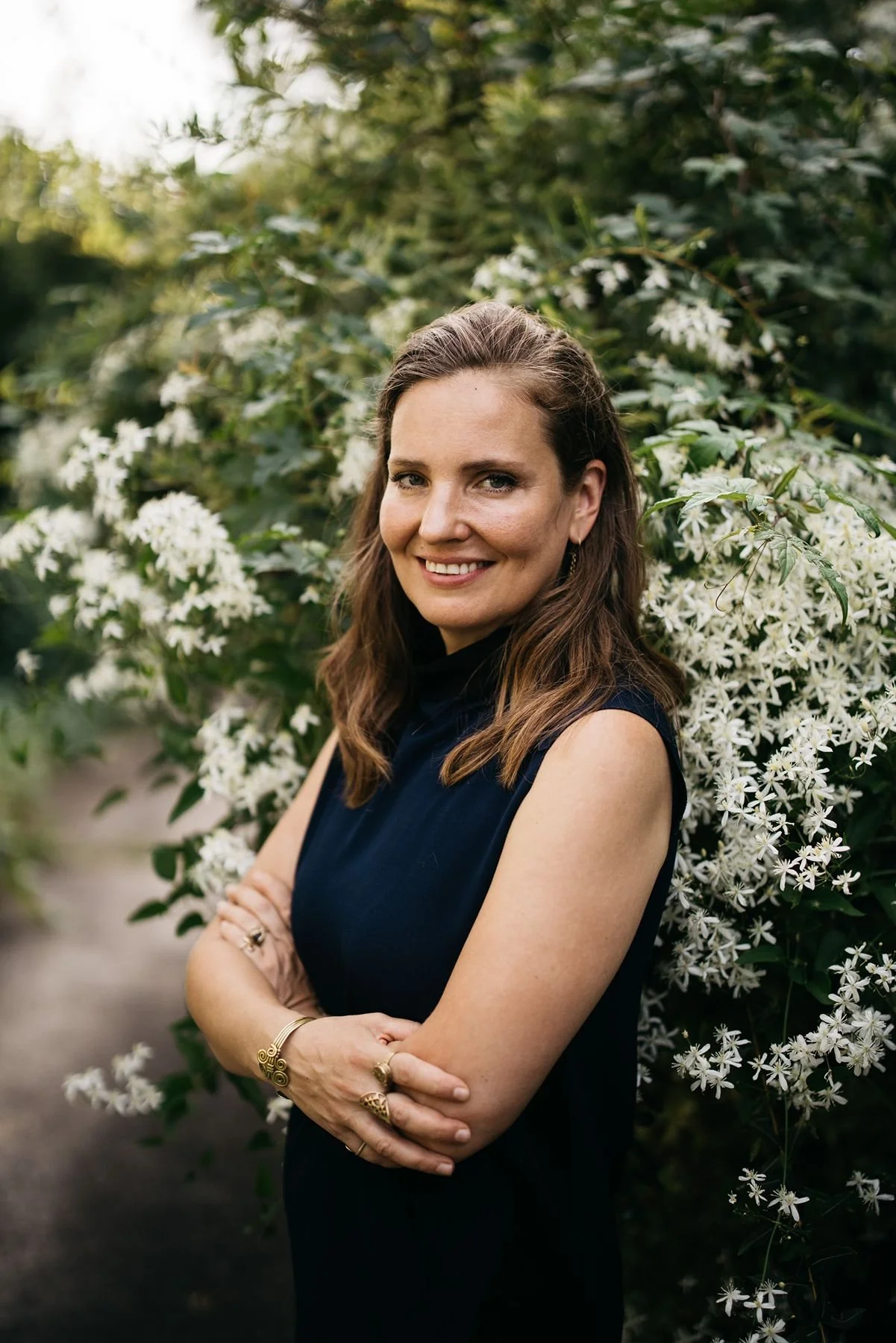

Do you inhabit your own life?
It is possible to have a life that looks good on paper and still carry a persistent sense that something is not right. You may have already done meaningful inner work and understand many of your patterns, yet still sense that something has not shifted.
I work best with people who are seeking deep transformation. I am interested not only in healing the wound, but in what allows a person to stop being governed by it.
I believe we can heal more deeply than we imagine. Healing may require clearing what has accumulated in our own lives, what we have inherited through our family lineages, and what we have absorbed from the worlds we come from, so that we can inhabit our lives with greater freedom and aliveness.
Coming home to the body
Making sense of our history can be profoundly important. But trauma is carried not only in the stories we tell about our lives; it can also be held in the body. The journey of liberation includes coming back into the body, especially when we have learned to live primarily from the neck up.
I work with somatic attunement. When I am with a client, I pay attention not only to the story being told but to what is happening in the client’s body, in my own body, and in the relational field between us. This can reveal what the conceptual mind alone may miss.



Healing happens in relationship
I believe trauma is relational in nature. It can grow out of how we were treated and what we needed but did not receive. It can also lead us to disown parts of ourselves in order to preserve connection. For that reason, healing must also happen in relationship.
The therapeutic relationship needs to be both nurturing and rigorous: a place where more of who we are can become visible, and where therapist and client can meet old forms of self-protection with compassion and examine them honestly.
I pay close attention not only to what a client tells me about the relationships in their life but to the relational and energetic field we create together. Sometimes the work calls for gentleness; at other times, greater accountability. I see both as forms of deep care within a relationship I regard as sacred.
What we carry from those who came before us
What we experience as an individual struggle may have roots in the larger family system. Our need to belong can make us unconsciously loyal to inherited ways of suffering, relating, or surviving.
I hold deep reverence for my clients' families and the systems they come from. The aim is not to reject our families or blame those who came before us, but to recognize what belongs to us and what does not, so that we can remain connected without continuing to carry what is not ours.
Beyond the family system, I see racism, transphobia, homophobia, and the exclusions tied to gender, sexuality, class, immigration status, and culture as different expressions of the same spiritual virus, a virus of dehumanization, superiority, and division. It is something humanity carries and transmits rather than a fixed truth about who people are. I believe our own liberation requires us to recognize and clear these patterns within ourselves.
My approach
My clinical training includes Gestalt therapy, psychoanalytic and relational psychotherapy, family systems, Family Constellations, process-oriented therapy, EMDR, somatic and trauma-informed approaches, couples therapy, and ketamine-assisted psychotherapy. I also draw on field theory, energy work, and healing traditions that honor the wisdom of the body.
I also understand each person within the larger social and cultural worlds they inhabit. Our experiences of race, gender, sexuality, class, culture, immigration, belonging, and exclusion shape our lives and inevitably enter the therapeutic relationship. I am a trans-affirming therapist and am committed to racial and social justice.


Who I work best with
I work best with discerning, honest clients who are ready to look at their own side of the street. This work asks you to consider not only what has happened to you, but how you participate in your life and relationships now.
There must be room for the places where you were hurt and the parts of you that still need tenderness and care. But we also need to be able to look honestly at how your adaptations may now affect you and the people around you. Compassion and responsibility belong together